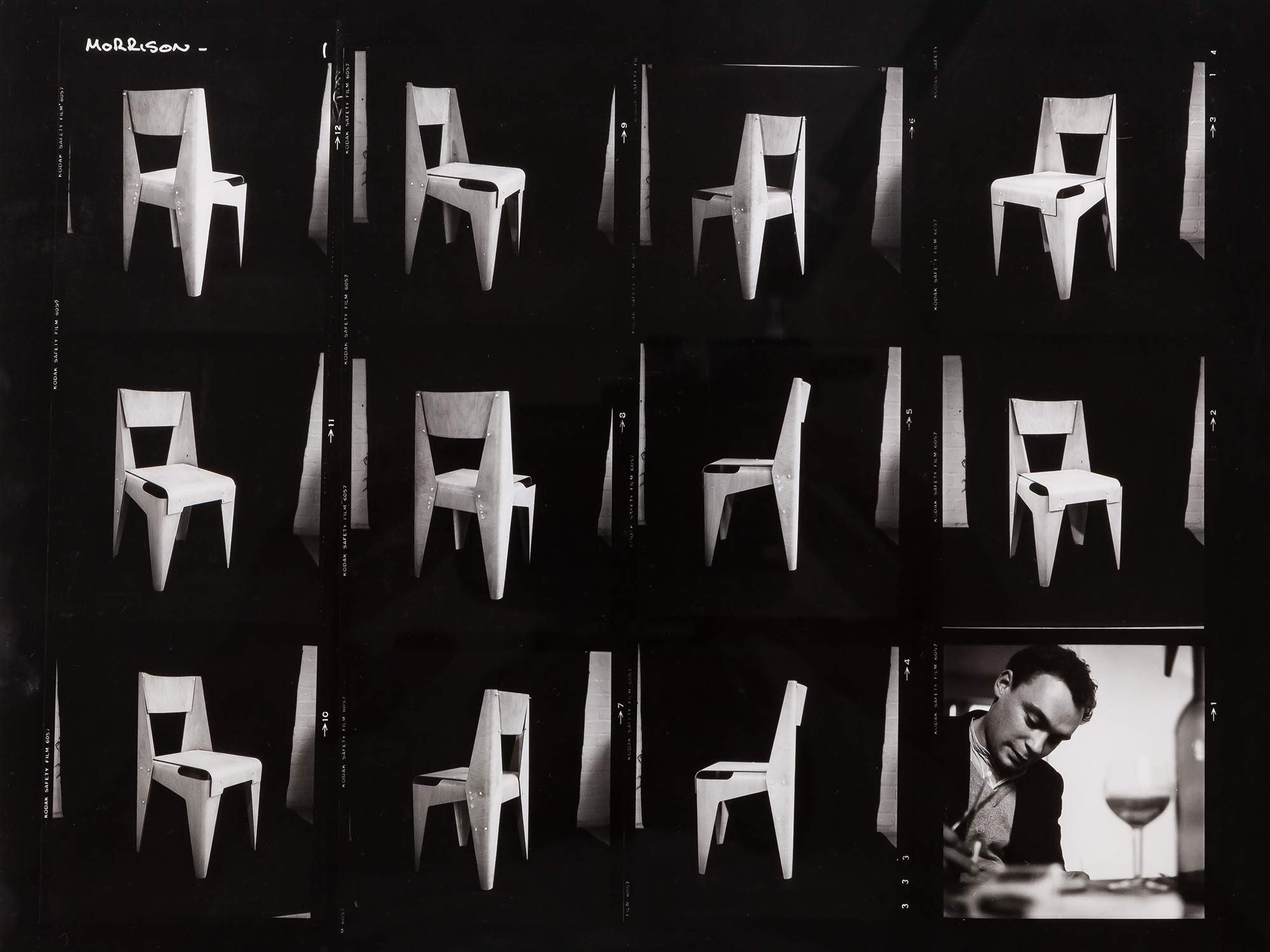
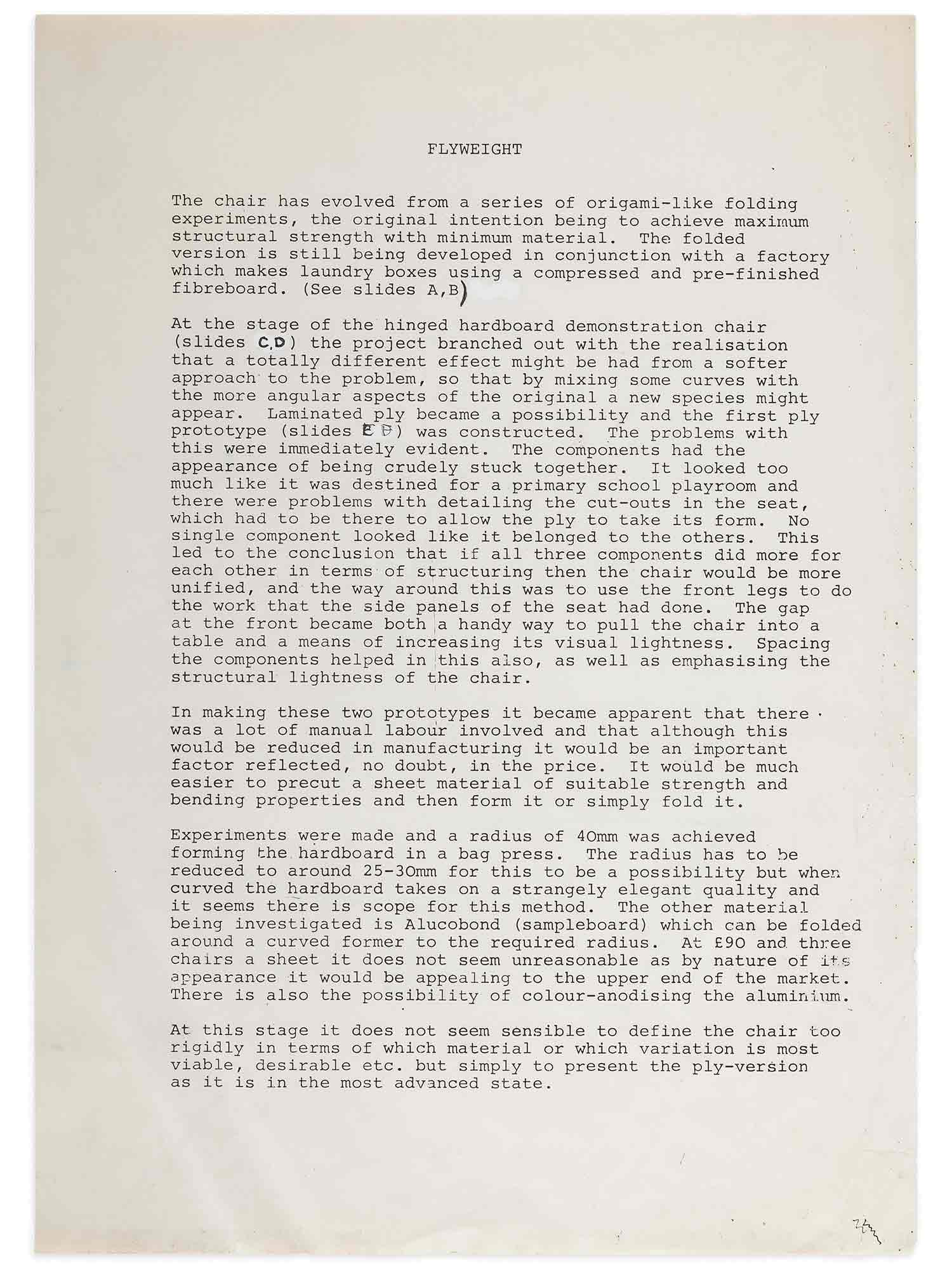
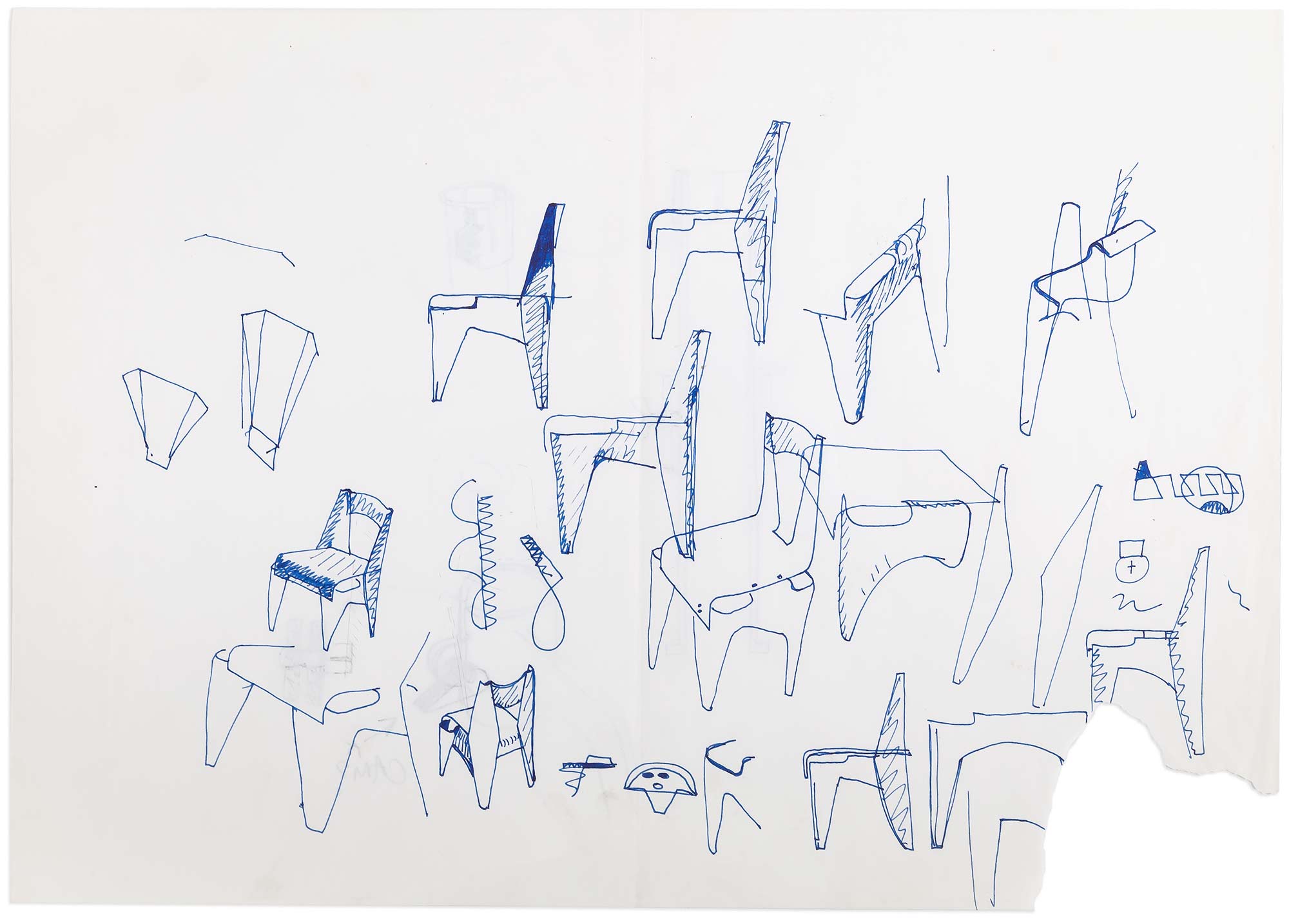
The Moulded Plywood Chair developed from Jasper’s work on the Laundry Box Chair in his final year at the Royal College of Art. In a piece about it for his tutors entitled ‘Flyweight’ (below), he wrote that the project branched out with the realisation that a totally different effect might be had from a softer approach to the problem, so that by mixing some curves with the more angular aspects of the original a new species might appear. Laminated ply became a possibility... The problems with this were immediately evident. The components had the appearance of being too crudely stuck together. It looked too much like it was destined for a primary school playroom and there were problems with detailing the cut-outs in the seat, which had to be there to allow the ply to take its form. No single component looked like it belonged to the others. This led to the conclusion that if all three components did more for each other in terms of structuring then the chair would be more unified, and the way around this was to use the front legs to do the work that the side panels of the seat had done. The gap at the front became both a handy way to pull the chair into a table and a means of increasing its visual lightness.
The portrait in the contact sheet above is of Jasper’s friend Paul.
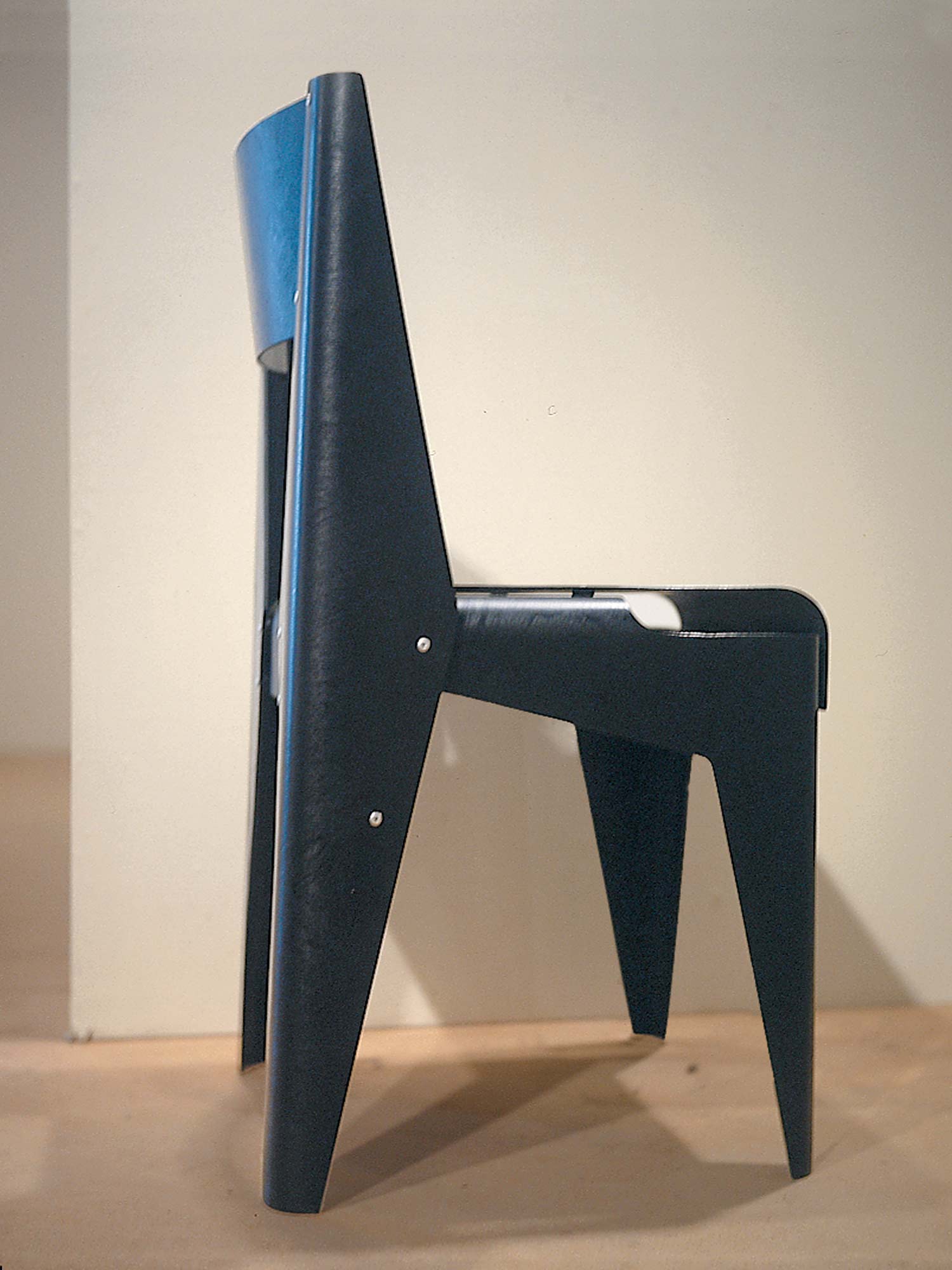
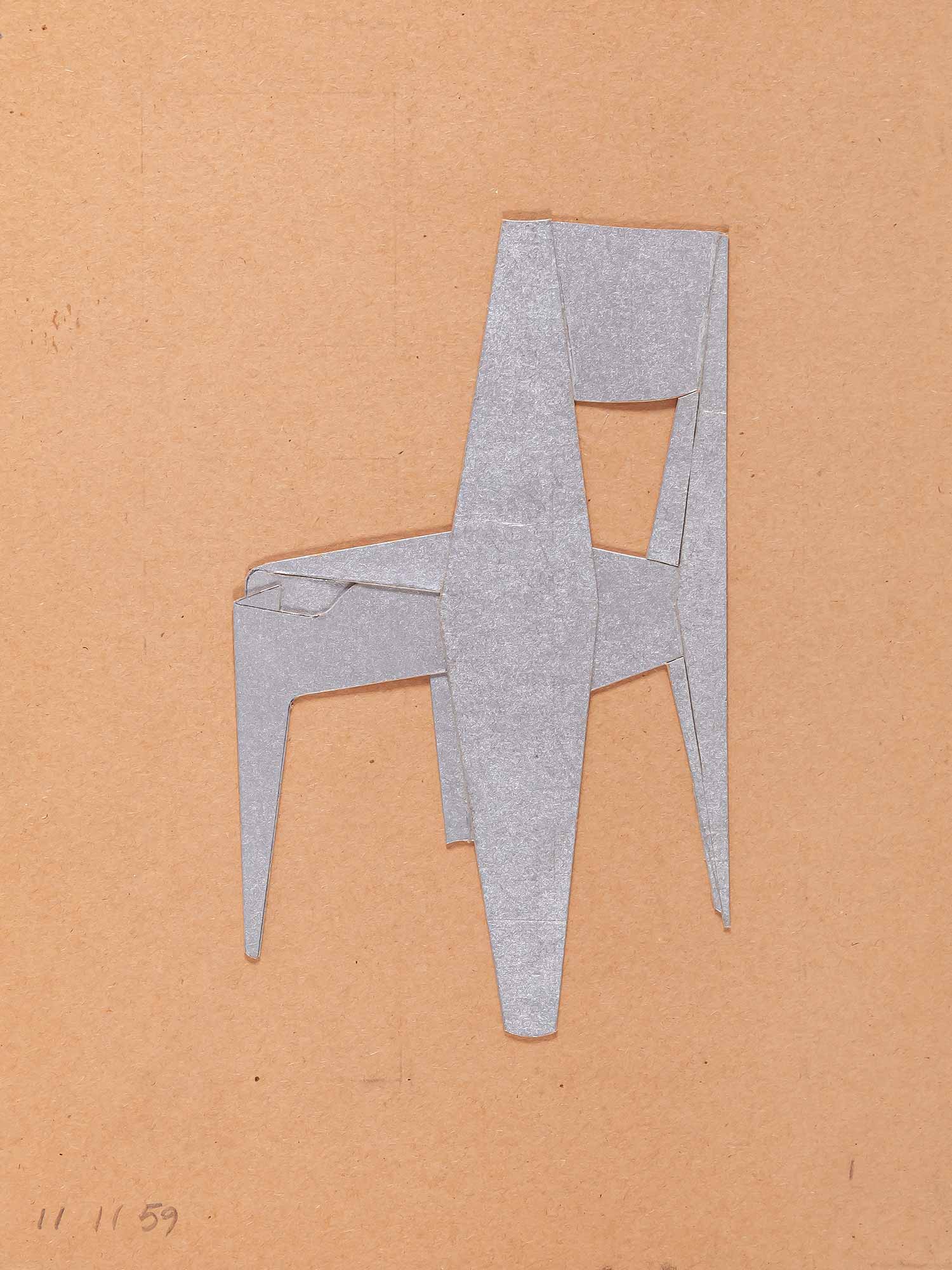
The Moulded Plywood Chair was light and unrealistically fragile. Only one finished prototype was made in black-painted plywood. The collage of the chair (below) may have been submitted for Jasper’s final examination at the Royal College.
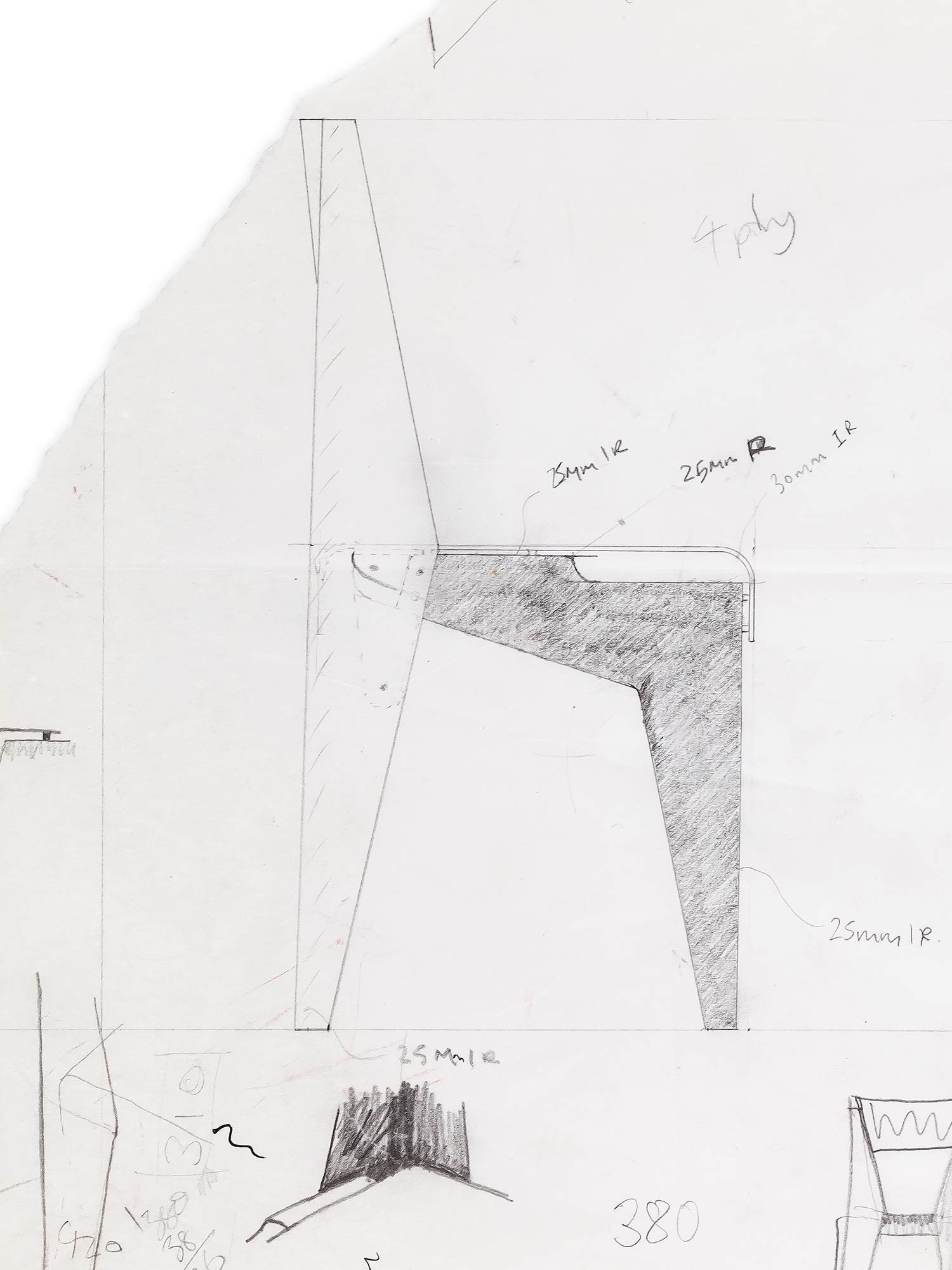
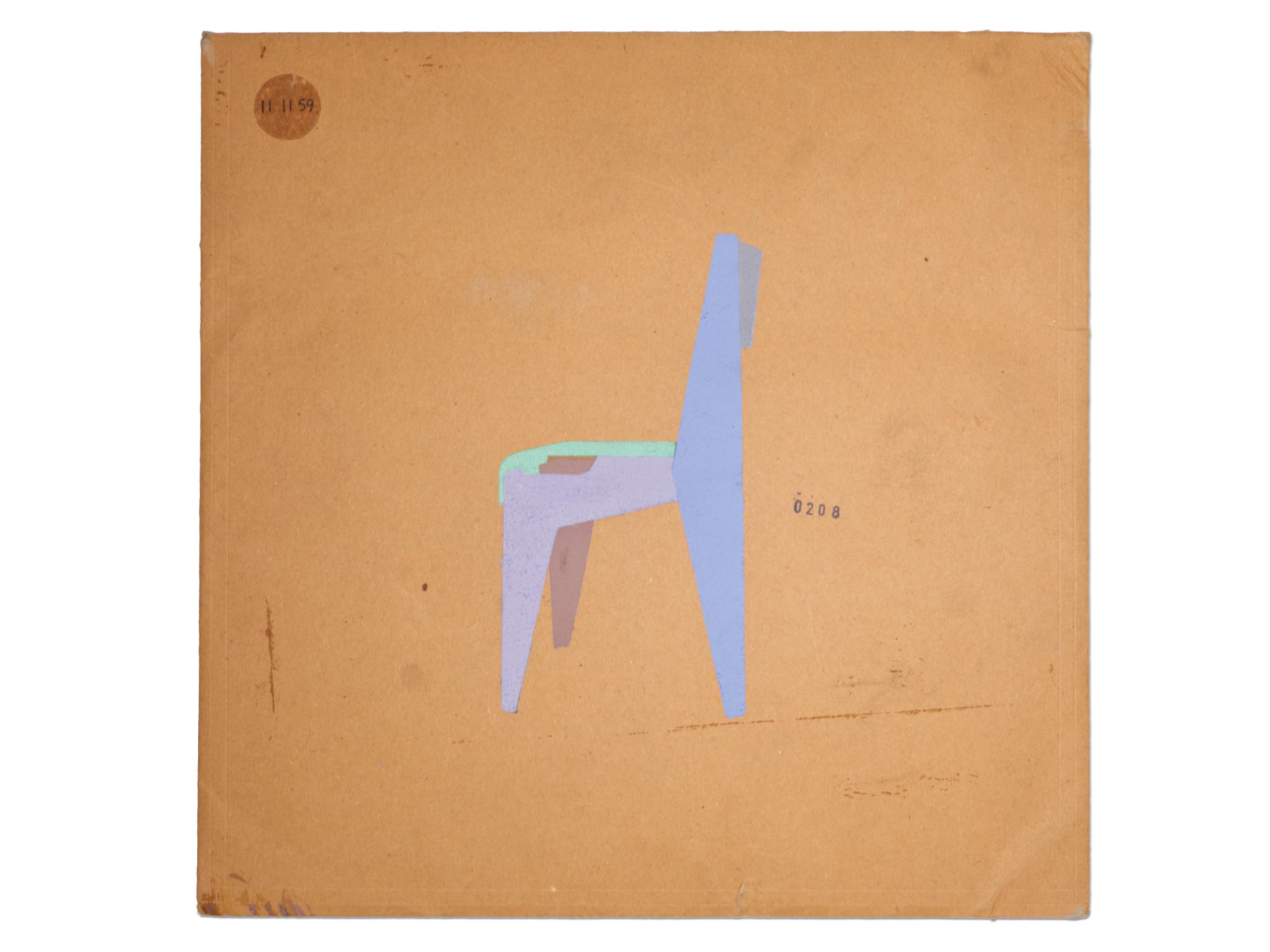
Jasper made this screenprint of his Moulded Plywood Chair on a 12” record envelop, to contain his submission to a competition run by – he thinks – the Boilerhouse Project. He did not win.