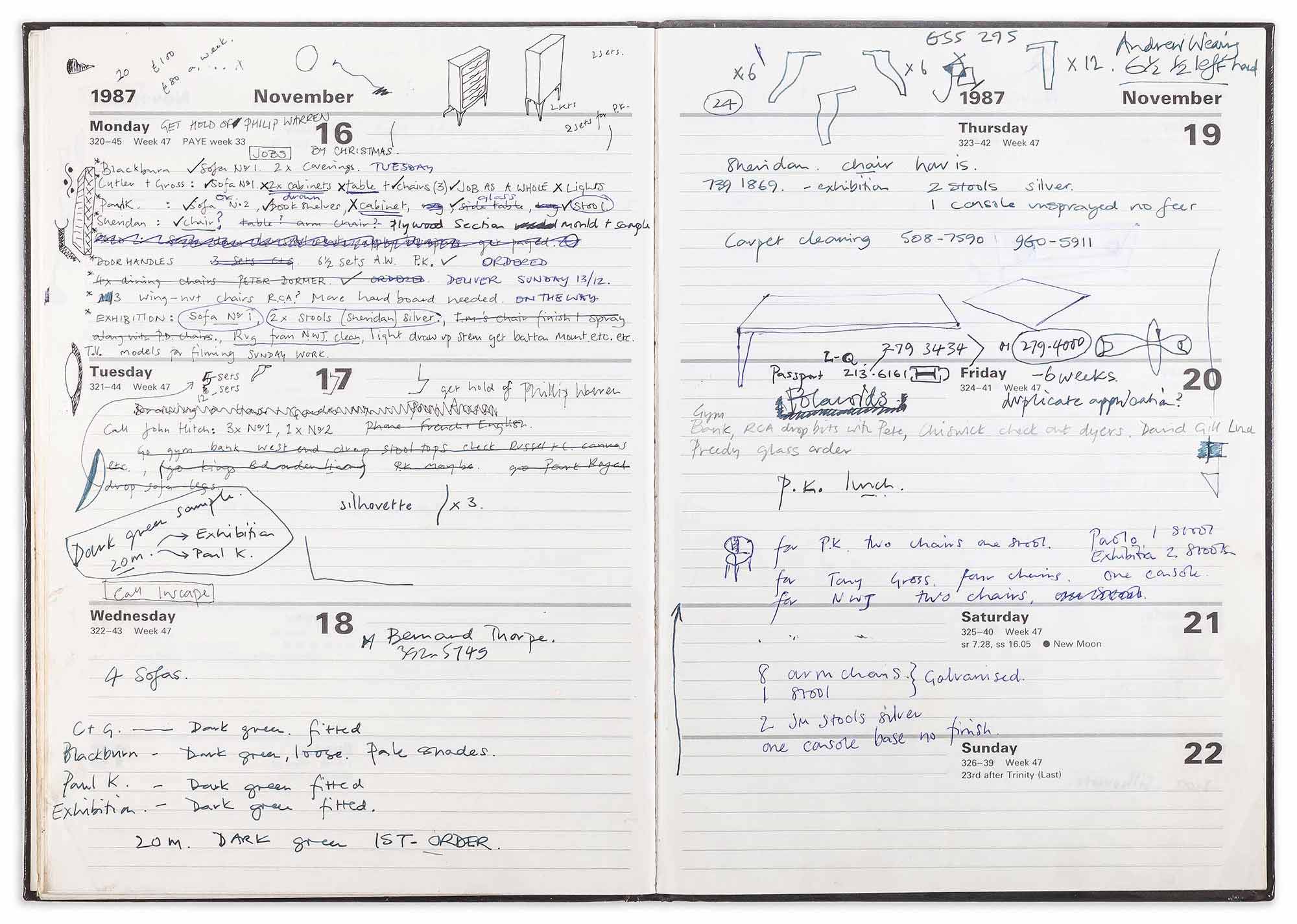
1985 to 1988 were my taxi driver years. I drove around London picking things up and dropping them off in a gold Peugeot 304 Estate. The Peugeot didn’t last as I forgot to put oil in it. In 1986 I got a Renault 8, a darkish grey, boxy thing. In 1988 I drove it to Berlin and back.
Jasper’s diary in 1987 (above) shows the peak of this period as he took orders for furniture, ordered parts from suppliers, and ferried finished and unfinished pieces around London.
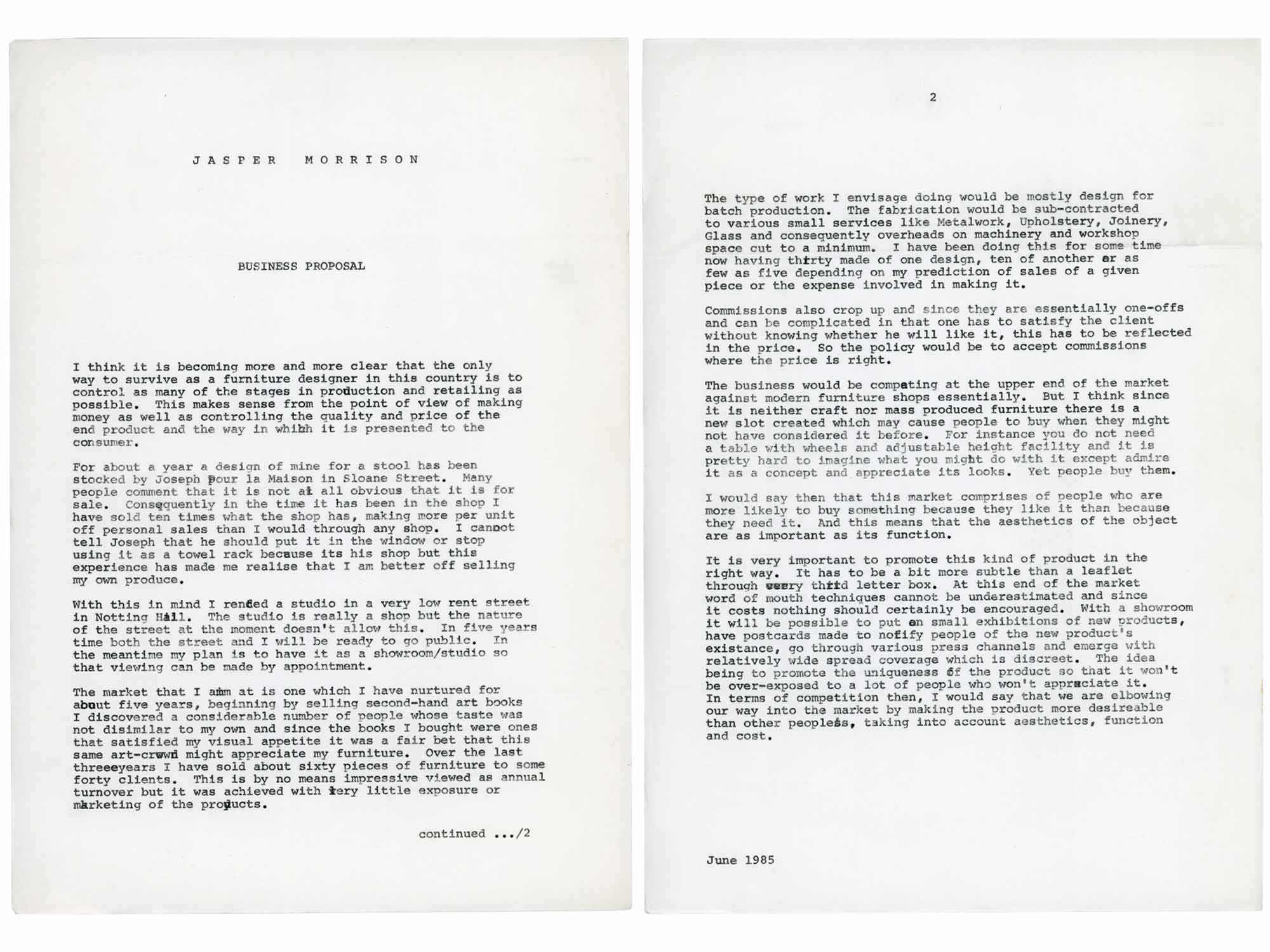
In the same month as he graduated from the Royal College of Art, he wrote a business proposal (below) setting out how he would be a self-sufficient designer, producing and selling his own designs. It began: I think it is becoming more and more clear that the only way to survive as a furniture designer in this country is to control as many of the stages in production and retailing as possibly. This makes sense from the point of view of making money as well as controlling the quality and price of the end product and the way in which it is presented to the consumer.
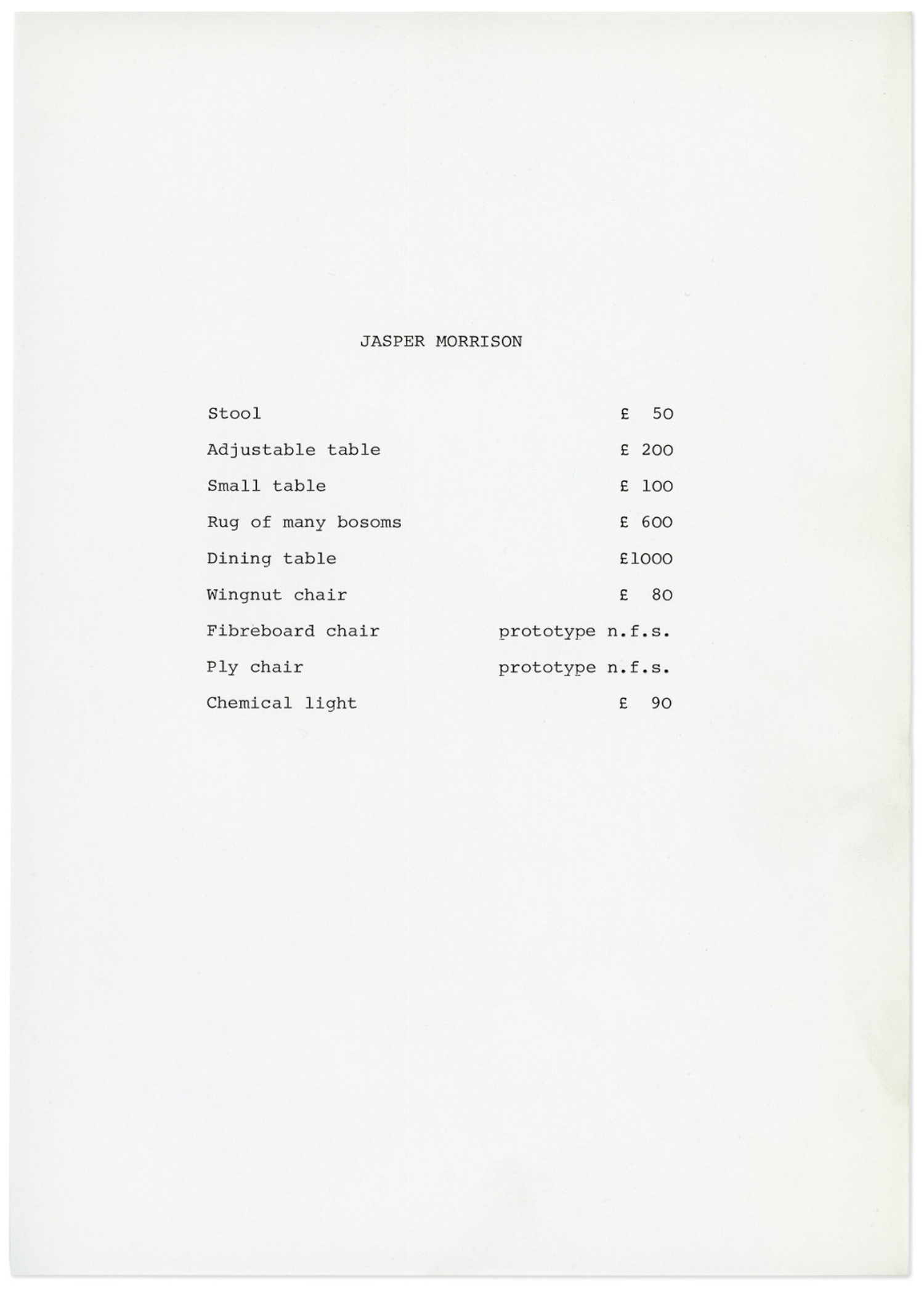
A price list for the furniture Jasper had for sale at the time of his degree show in 1985.
As Jasper explained, he had already found some success by producing and making his own designs: Over the last three years I have sold about sixty pieces of furniture to some forty clients. This is by no means impressive viewed as annual turnover but it was achieved with very little exposure or marketing of the products.
He set about building on this experience. In 1988 he told Rick Poynor that he built on contacts he made while using the RCA’s materials library to develop a network of invisible back-street suppliers and services to support him: little engineering companies, metal spinners, glassworks, aluminium casters, plywood stockists, makers of wooden blinds, packaging companies. He had parts made in batches of ten or fifty, for storage and assembly by himself, his assistants or his suppliers.
In those early Thatcher days, there were hundreds of small workshops in London. You could find someone to make anything you needed. I used to drive around places like Kentish Town to get things made like the earliest Thinking Man’s Chairs. Or Shoreditch to get things nickel plated. Edmonton or Hackney for upholstery. They were all very nice people, proud of what they were doing. The plater in Shoreditch was a character called Danny Weinstein who owned a good portion of Rivington Street where he made tubular furniture and did chrome and nickel plating. I found him through Sheridan Coakley.
Jasper wrote at the time: the designer builds his own factory, not with bricks, but with the sprawling backstreets teeming with services and processes for materials, both common and uncommon to his trade. He explained to a correspondent: Driving around to all these little places gives you so many ideas. ... If you become a producer as well as a designer your appreciation of manufacturing problems becomes sharper and your ways of solving the difficulties becomes more inventive.
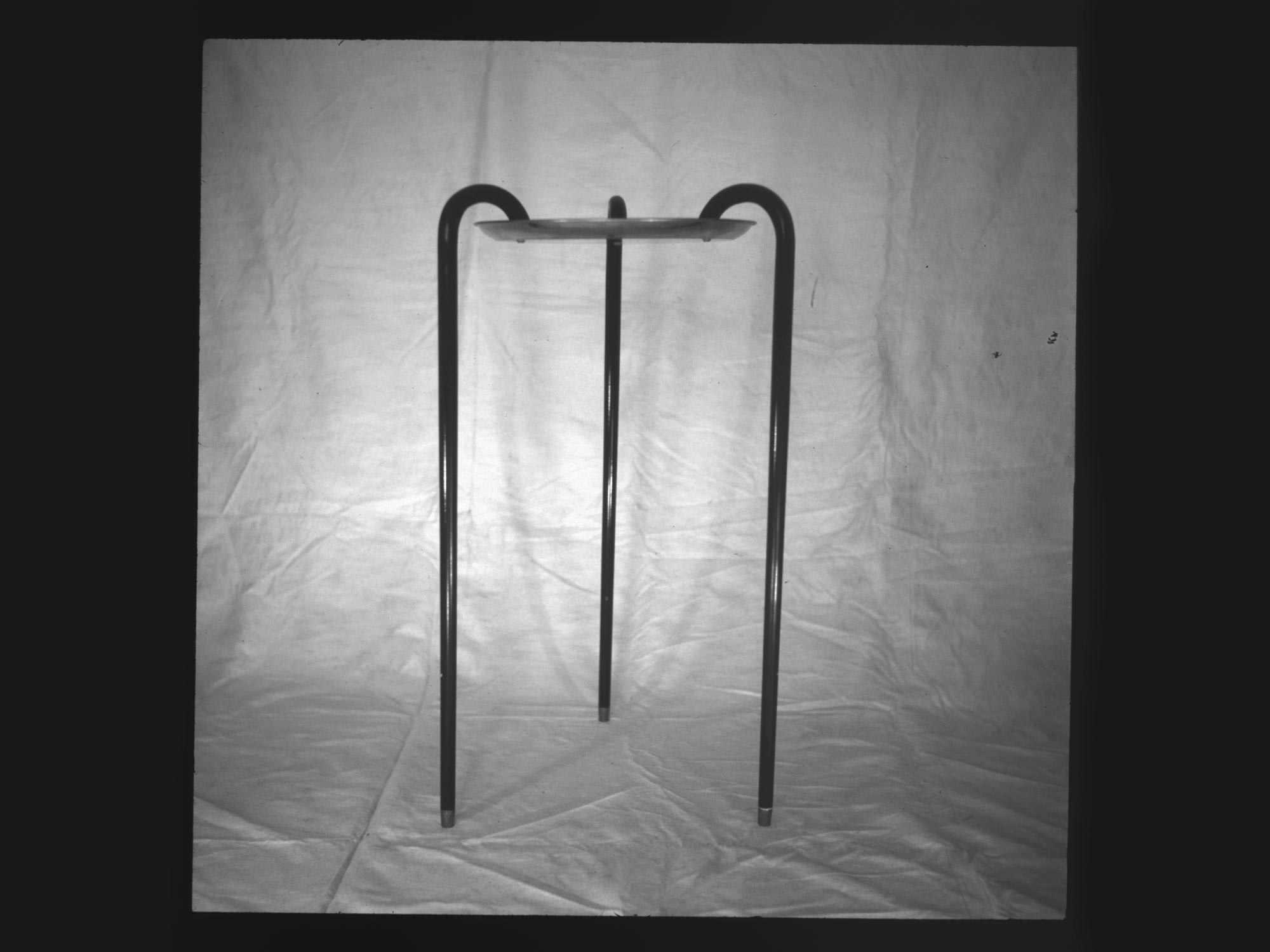
Walking Stick Table, designed in 1986. Made of walking sticks and a stainless-steel tray.
Just before I graduated from the Royal College, I hired a shopfront on All Saints Road at £25 a week to be my studio in the back and a showroom in the front. It was a very rough space. I never bothered to do much to it. At the window in the back I had my drawing-board, and there was a fireplace. I would go to Garcia’s on Portobello Road and buy cheap Rioja and chorizo and grill sausages on the fire. I had a fork for putting them on the fire. Even today people remind me about coming round and eating sausages cooked on the fire. The front had no heating and was very cold in winter. In the end, I sublet the front to a friend of a friend. He used to play the piano, and not pay the rent. Having a studio like this made me feel like a serious designer. But I didn’t have it for much longer than a year.
By 1988 Jasper had sold about a hundred each of his best-sellers, the Slatted Stool and the Side Table. Over the course of this period he also designed interiors for private clients, took part in exhibitions and did a bit of teaching. His taxi driver years ended when he began to make a living from his projects with FSB and Cappellini.
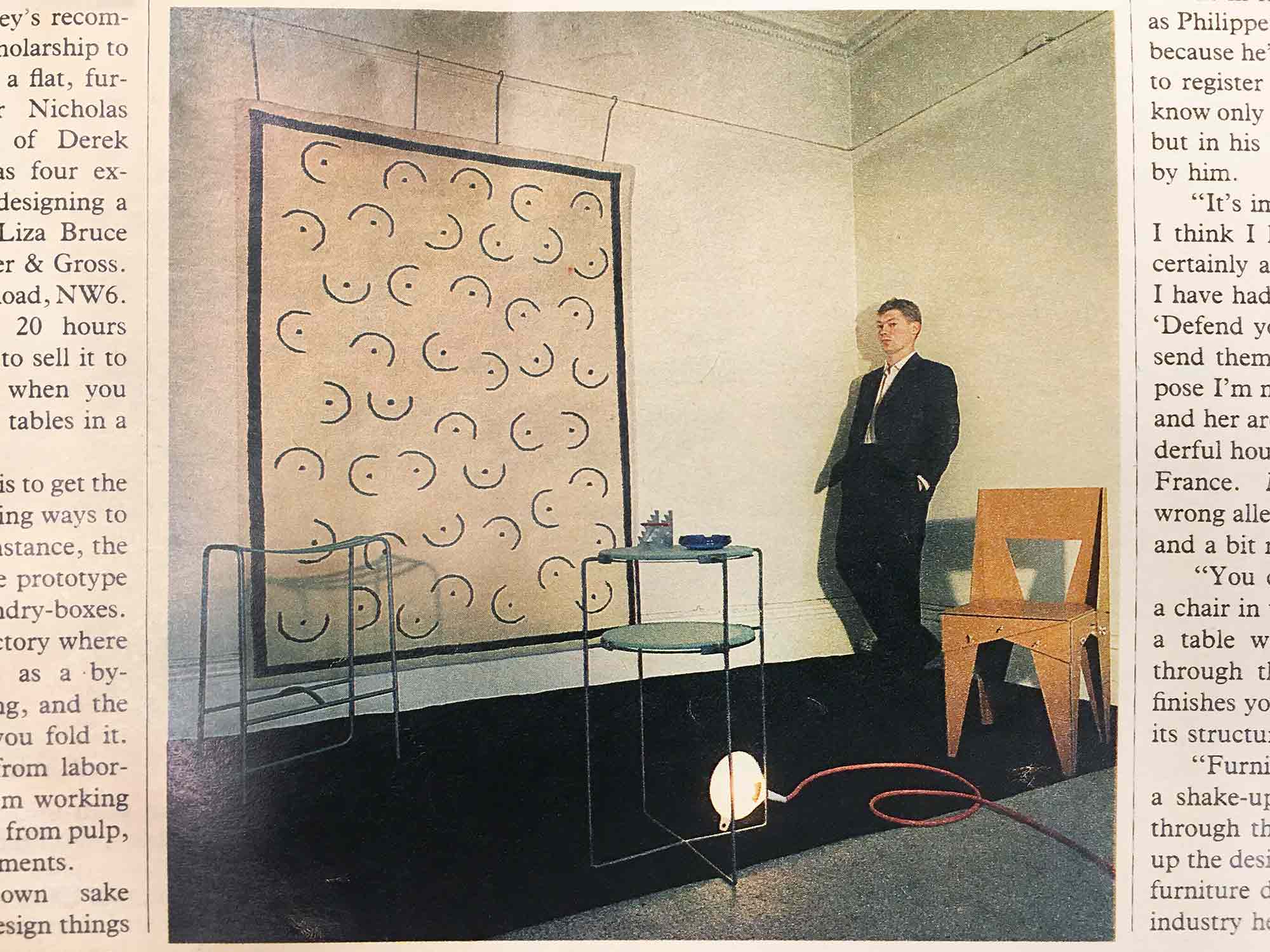
Jasper photographed for the Sunday Times Magazine by Sandy Porter, with the pieces he was producing and selling in autumn 1985.